Gardener Palmers Green: Recycling and Sustainability
 Gardener Palmers Green is committed to creating an eco-friendly waste disposal area and a sustainable rubbish gardening area across Palmers Green and neighbouring streets. Our approach balances practical garden waste management with a low-carbon operational model so that local green spaces benefit from better reuse, reduced landfill, and improved soil health. We work alongside residents and local initiatives to ensure that garden and household recyclables are sorted, reused, or composted wherever possible.
Our vision for a greener Palmers Green includes a clear target: to reach a 70% recycling rate of all collected garden and household waste by 2030. This recycling percentage target is ambitious but achievable by combining on-site segregation, partnerships with borough transfer stations, and targeted reuse schemes. A high recycling rate reduces emissions and supports local circular economy activity in the borough.
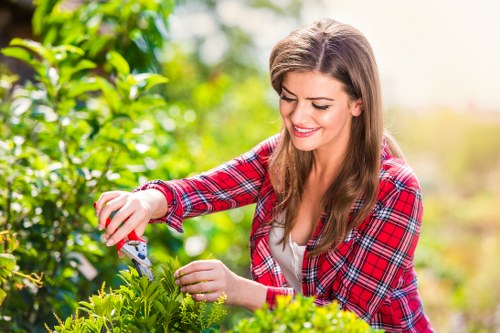
Eco-friendly waste disposal area
We manage designated rubbish gardening areas that follow the boroughs' approach to waste separation — separating organics, mixed recycling (paper, cardboard, glass, metal, and plastic), and residual waste. Our Palmers Green gardener teams implement clear labelling and separate bins so that compostable cuttings and woody material go to composting channels while plastics and tins are routed to local recycling lines. This separation mirrors the London borough practices and helps maximise diversion from landfill.Local transfer stations and processing
To ensure materials collected in Palmers Green are processed responsibly, we work with nearby transfer stations and recycling facilities such as Edmonton EcoPark and other North London transfer centres operated by regional waste authorities. These partner transfer stations receive segregated loads, process organics for anaerobic digestion or open-air composting, and route recyclable streams to material recovery facilities. By linking directly to local transfer stations we keep journeys short and reduce our operational carbon footprint. Partnerships with charities form a key pillar of what the Gardener Palmers Green service provides. Rather than discarding reusable items recovered from garden clearances — like pots, garden tools, and furniture — we work with community charities and reuse organisations that refurbish or redistribute items to families and community gardens. These collaborations increase reuse rates and support social value in the area, turning potential waste into resources for local projects.
Our sustainable rubbish gardening area is designed to support circular use: separating green waste for compost, saving intact items for donation, and diverting recyclables to the appropriate streams. We also maintain a simple list of common items diverted from waste, including:
- Garden cuttings and leaf litter for community composting
- Clean plastics, glass and cans routed to borough recycling
- Pots, timber and tools donated to local charities
Fleet emissions are a major focus for any environmentally conscious gardener. Gardener Palmers Green operates a mixed fleet that increasingly relies on low-carbon vans — electric vans where infrastructure allows and low-emission Euro 6 hybrids on longer rounds. This reduces particulate and CO2 emissions in residential streets. We prioritise route optimisation and consolidated collections to lower mileage and increase the efficiency of each trip.
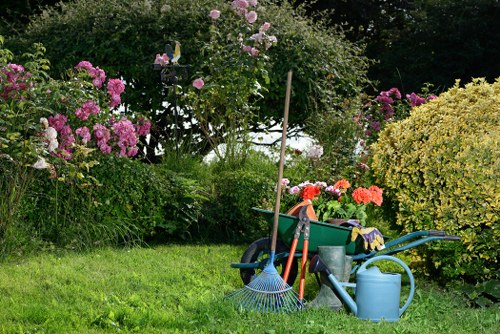
Training and community engagement
We run brief, practical training for team members so every Palmers Green gardener understands waste separation standards and how to minimise contamination in recycling streams. Staff are trained to spot items suitable for donation, to process compostable loads correctly, and to communicate simple recycling messages. This helps maintain high-quality recyclate arriving at transfer stations and supports the borough's waste separation policies.
Local impact and measurable goals
The programme tracks key performance indicators: recycling percentage target progress, tonnage diverted from landfill, number of donated items, and fleet emissions reductions. Our immediate aim is to hit 50% recycling within two years and steadily increase to the stated 70% recycling goal. Achieving these goals depends on coordinated effort with Enfield-area transfer facilities, community partners and charity networks that receive reusable items.In practice, a Palmers Green gardener encounter might mean: sorting garden waste into compostable and non-compostable bags, setting aside intact planters for donation, and loading recyclables separately so they reach the correct material recovery facility quickly. We champion small operational changes — from using reusable tarpaulins to bundling clippings for local compost hubs — that collectively reduce waste and emissions.
We also evaluate our environmental footprint regularly. Emissions from vehicles are logged and reviewed, transfer station distances are minimised by smarter logistics, and charity partnerships are audited to ensure high reuse rates. Together these measures form a resilient, local model for sustainable gardening waste management that complements borough recycling schemes and promotes low-carbon practices.
Gardener Palmers Green is dedicated to making the sustainable rubbish gardening area a practical, community-focused reality: hitting strong recycling targets, partnering with local transfer stations, collaborating with charities, and running a low-carbon van fleet. By aligning practical on-the-ground work with the borough’s waste separation approach, we ensure that Palmers Green benefits from cleaner streets, richer soil, and a robust circular approach to garden and household waste.